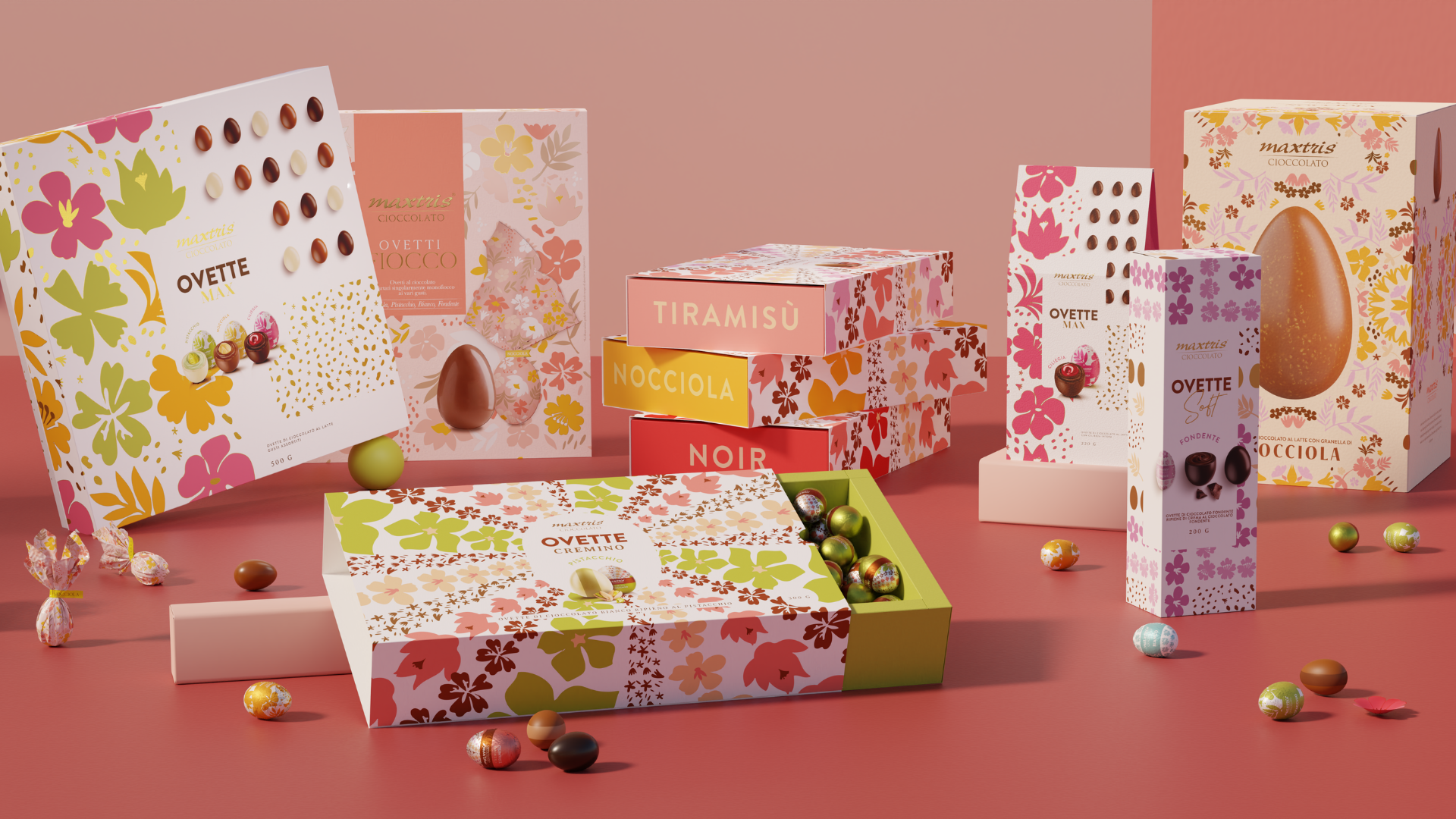
In packaging design, some projects are imagined.
And then there are those you can see, rotate, compare and refine before they even enter production.
For the new Maxtris Easter range, the work did not stop at the creative development of the packaging: the project came to life through 3D modelling and realistic rendering of packs and products, turning the concept into true digital twins.
An approach that made it possible to evaluate creative directions, materials, finishes and visual impact in advance, creating a faster, more precise and more collaborative process. It also produced visual assets that could be used across every communication tool involved in the project.
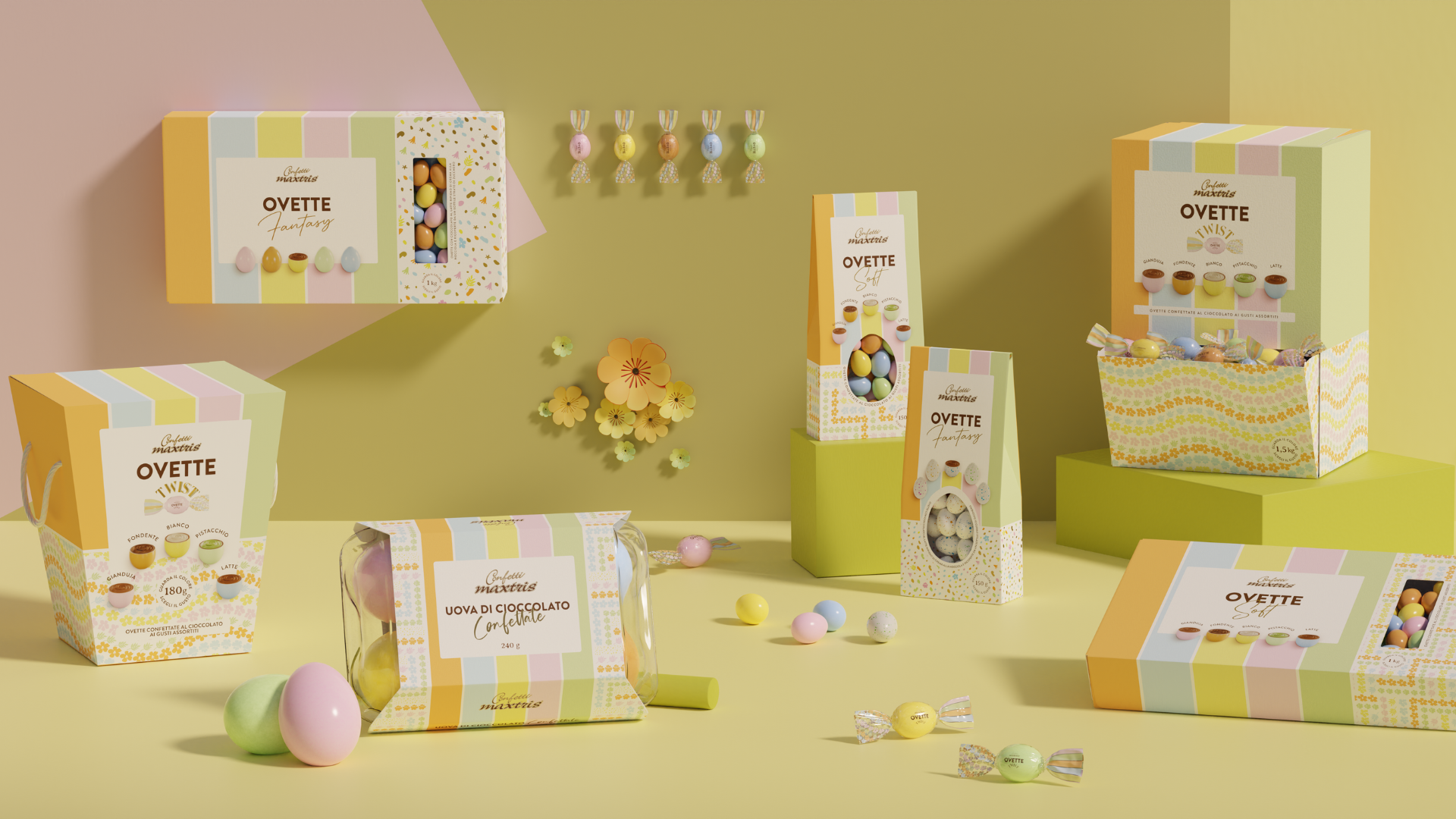
When developing a new seasonal range, packaging does not simply need to look good: it needs to work. For Maxtris, the objective was to anticipate creative and production decisions as much as possible, turning the packaging into something visible and testable before physical production.
3D technology made it possible to:
model packs and products digitally
simulate textures, materials and embellishments
compare different creative proposals
check proportions, visual impact and shelf presence
make dialogue between agency and client easier during decision-making
Because when you can preview a pack realistically, choosing becomes much simpler.
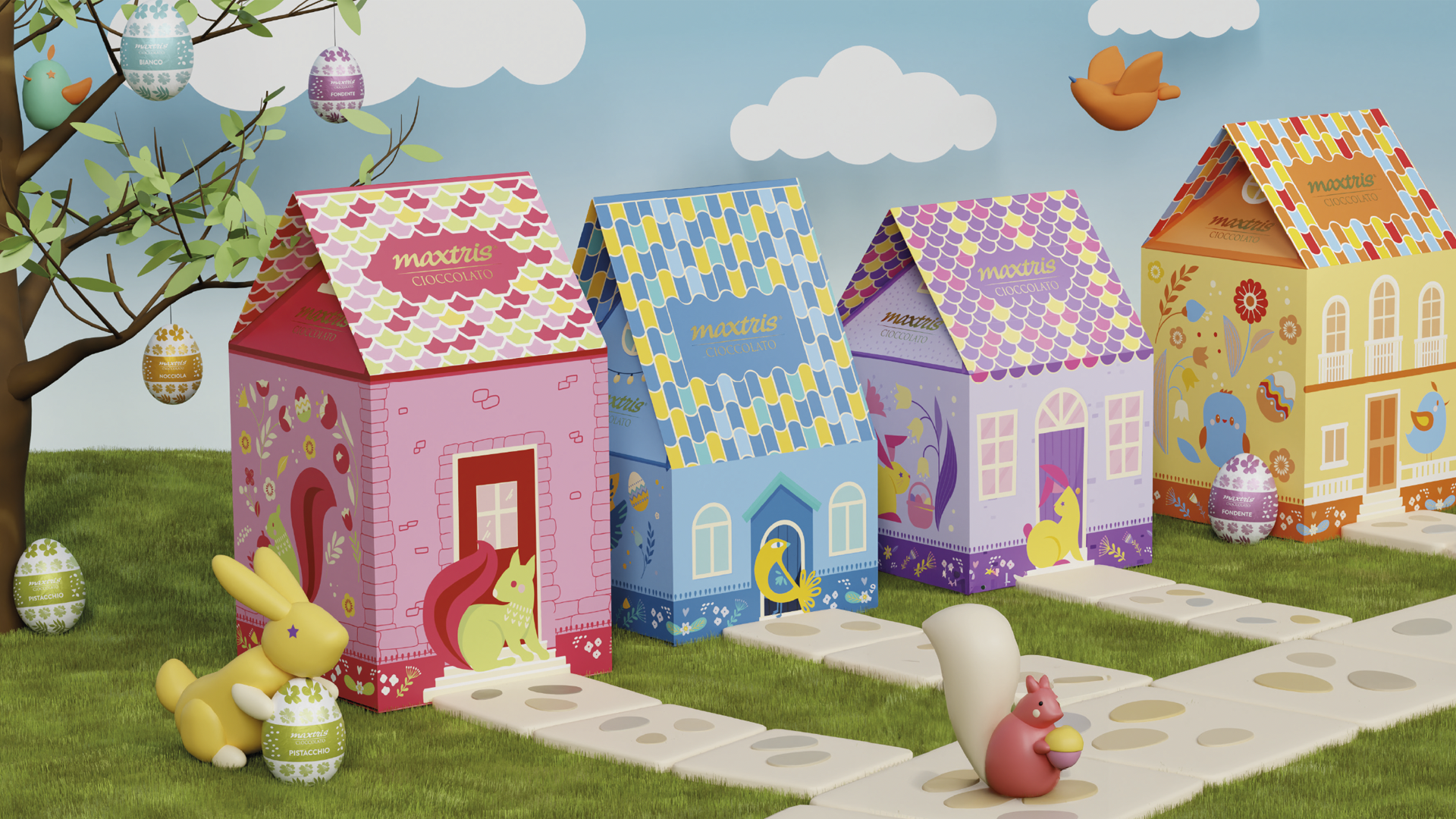
The project began with the development of the new Maxtris Easter range, but 3D made the process even more strategic. Every pack was digitally modelled from the production files, creating a realistic three-dimensional simulation capable of reproducing:
real volumes
pack proportions
graphic application
textures and finishes
rendering of foils, materials and embellishments
contextual visualisation of the finished product
The real strength of this approach was the ability to compare different creative directions and assess them realistically before making the final choice. No longer simple graphic proposals, but packs that already “almost existed”, ready to be analysed, discussed and refined: digital twins of the real pack.
But the project did not stop there.
The hyper-realistic renders of packs and products became an integral part of the range communication: ultra-high-definition images used for sales catalogues, websites, social content and promotional materials, as well as video animations, turning 3D into both a design and a communication tool.
Alongside the pack, the point-of-sale display was also developed in continuity with the range’s key visual, carrying the same visual story from packaging to shelf.
Through 3D animation, the digital models also gained movement, becoming real product spots: dynamic, high-impact visual content capable of presenting the range in a more engaging, creative and memorable way.

The digital mockup was not only a design tool. Once the digital twins had been created, the project expanded across the entire communication system, turning 3D into an asset that could work on multiple levels.
The hyper-realistic renders made it possible not only to anticipate creative packaging evaluation, but also to produce commercial and promotional content earlier, reducing the need for physical photo shoots and optimising time and cost.
3D animation added another layer of storytelling, transforming the digital models into dynamic video content capable of showcasing the product in motion and creating high-impact presentations.
The project involved:
3D modelling of the packs
realistic rendering of packs and products
simulation of materials and embellishments
comparison of alternative creative directions
images for sales catalogues
website content
creative assets for posts and social communication
3D product animations
high-impact digital videos and spots
development of promotional materials
design of the coordinated point-of-sale display
range-extension animations
use of the ALF Viewer for detailed analysis
A single digital model capable of becoming a creative, commercial and communication tool.
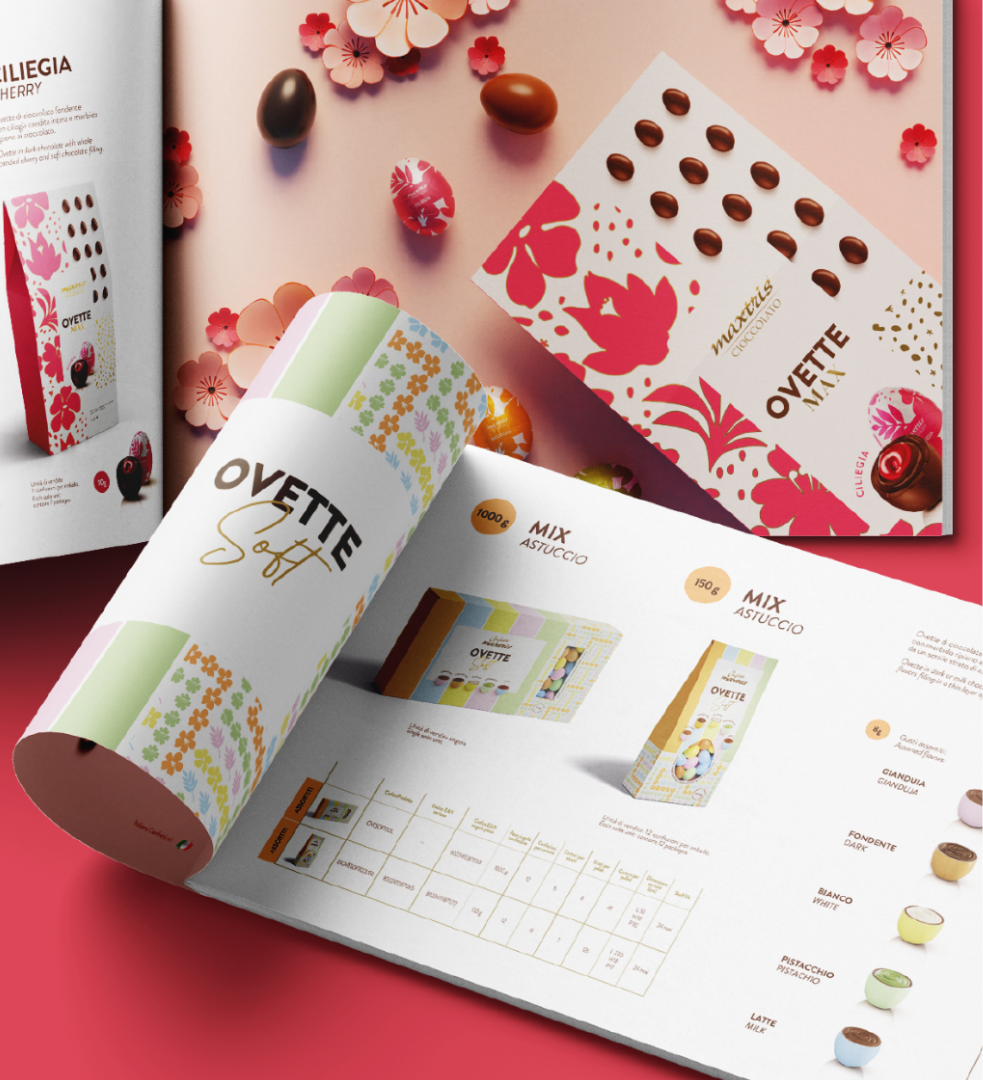
One of the most interesting aspects of the project was the dialogue with the client. Thanks to the ALF Viewer, Maxtris was able to inspect the packs in every detail, rotate them, look closely, compare different proposals and make more informed decisions before production.
This made discussion much more immediate, tangible and collaborative. You no longer have to “imagine” a solution. You look at it together.
And this is exactly where 3D changes the way we design: it helps the client choose better, and it helps me build with greater precision and creativity.
 Subscribe to the newsletterA dose of yellow, every now and thenSubscribe to the newsletterA dose of yellow, every now and thenSubscribe to the newsletterA dose of yellow, every now and thenSubscribe to the newsletterA dose of yellow, every now and thenSubscribe to the newsletterA dose of yellow, every now and thenSubscribe to the newsletterA dose of yellow, every now and thenSubscribe to the newsletterA dose of yellow, every now and thenSubscribe to the newsletterA dose of yellow, every now and thenSubscribe to the newsletterA dose of yellow, every now and thenSubscribe to the newsletterA dose of yellow, every now and thenSubscribe to the newsletterA dose of yellow, every now and thenSubscribe to the newsletterA dose of yellow, every now and then